Traditional B2B marketing playbooks insist that customer testimonials belong at the bottom of your funnel. In this session, Navan’s Director of Marketing Strategy, Molly Aviva, proves them wrong. Discover her exact playbook for turning unpolished, authentic human moments into top-performing, top-of-funnel paid ads that defeat creative fatigue.
The Evolution (and Devolution) of Trust in B2B Ads
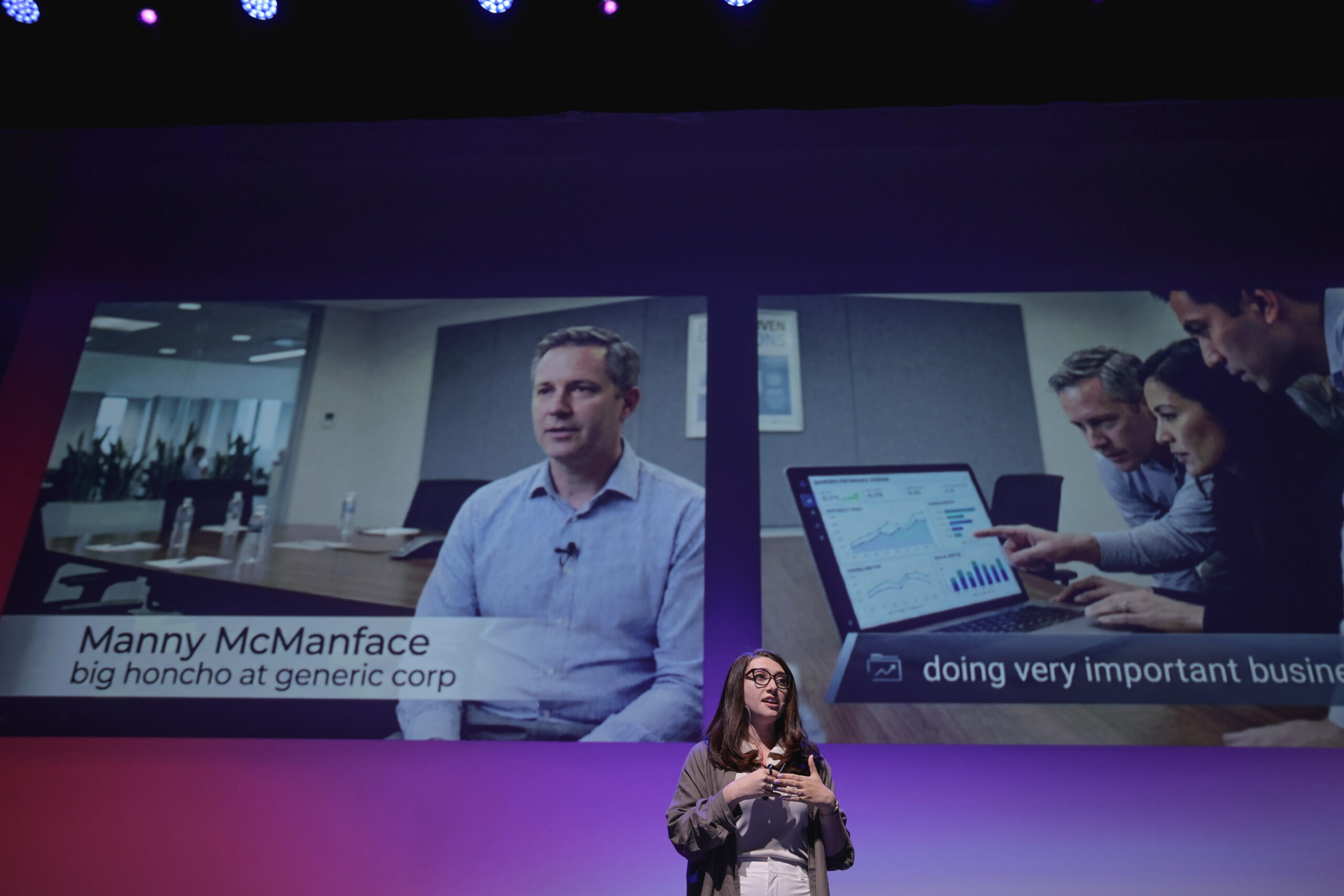
If you scroll through your feed right now, you will likely see a highly produced B2B ad: a smiling actor mentioning “ROI” and “KPIs,” backed by inspirational corporate music, or perhaps a perfectly scripted AI-generated avatar.
As Molly Aviva explains, marketers have tried to scale the oldest form of marketing—word of mouth—by creating polished, hyper-controlled testimonials. When real customers did not hit the right talking points, marketers pivoted to fake testimonials using actors, and now, to AI-generated videos.
The result? B2B buyers’ “bullshit radars” are on overdrive. The moment they suspect an ad is inauthentic, they scroll past. In B2B, buyers are putting their own professional reputations on the line when they champion a new product. To win them over, you must build authentic human trust.
The Navan Playbook for High-Converting Testimonials
To combat creative fatigue, Navan partnered with their customer, Canva, to create a series of short, high-energy testimonial ads for Meta and TikTok. Instead of dying out in a few weeks, this campaign ran successfully for an entire year.
Here is Molly’s step-by-step playbook for bringing genuine testimonials to the front of your performance channels:
- Cast Multiple Perspectives: Do not just interview the decision-maker. To build 360-degree buyer confidence, Navan interviewed the Head of Travel (the buyer), an Executive Assistant (the heavy user), and a Chief of Staff (the frequent traveler).
- Master the Pre-Production Screener: You can still have total control without writing a rigid script. Conduct 30-minute screener calls to break the ice, ask your questions, and pull out interesting personal tidbits. Map these answers into a storyboard so you know exactly what beats to hit on shoot day.
- Always Be Filming: Authentic trust comes from “perfectly imperfect” moments. Hit record the moment the subject sits down to get miked up. Capture their nervous laughter, their off-the-cuff remarks, and have them actually use your product on their phone during the interview for natural, unscripted reactions.
- Redefine the Hook: Today’s hook is no longer about flashing your logo and product in the first three seconds. The new hook is about proving that your story and pain point are real. Establish a relatable human fear or anecdote first, and the audience will stick around for the product pitch.
- Build Ads, Not TED Talks: Ditch the three-minute, passive interview. Break your footage down into short, punchy ads that focus on a single feature or a single pain point (like the fear of sitting next to a coworker on a 17-hour flight).
🎥 Watch the Full Session
Want to see exactly how these perfectly imperfect moments translate to the screen?
Watch the full video to see the actual Canva ads, hear the highly specific hooks that captured buyers’ attention, and learn how Molly structures her on-set interviews to keep non-actors completely comfortable.
This article is based on a session from Creatives and Conversions 2026 (Creatives & Conversions TLV III), brought to you by the Growth Marketing Pros community. Stay tuned for more cutting-edge strategies from top industry experts.